C7 Data Drop: The Tasting Room Effect
The data is in. Your tasting room is one of your most powerful OTC channels – and yours might still be leaving opportunity on the table.
copying text from a rasterize PDF is impossible btw. you need new, crisp images for the charts, these are just sample screenshots.
The tasting room remains one of the most important revenue drivers in winery DTC.
Point of sale (POS) accounts for 36.6% of total direct-to-consumer revenue, making it the second largest channel overall.
While wine clubs represent the largest share at 38.8%, the tasting room plays a critical role in driving direct purchases and connecting wineries with customers in person.
36.6%
Percent of DTC revenue
generated by Point of Sale (POS)
38.8%
Percent of DTC revenue
generated by Wine Clubs
11.7%
Percent of DTC revenue
generated by Ecommerce
13%
Percent of DTC revenue
generated by Inbound Orders
The Big Picture:
Tasting Room lmpact
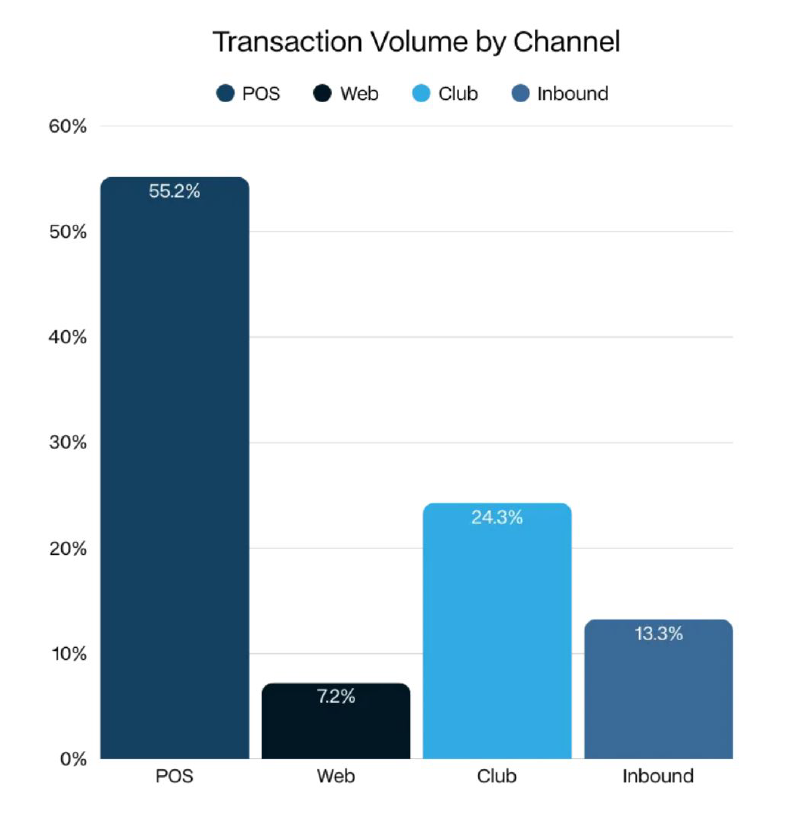
While the tasting room represents a large share of revenue, its impact becomes even clearer when looking at transaction volume.
More than 55% of all DTC transactions occur at the POS, making it the most frequent point of purchase for winery customers. This means the tasting room is where most customer interactions actually happen, even if other channels occasionally drive larger individual purchases.
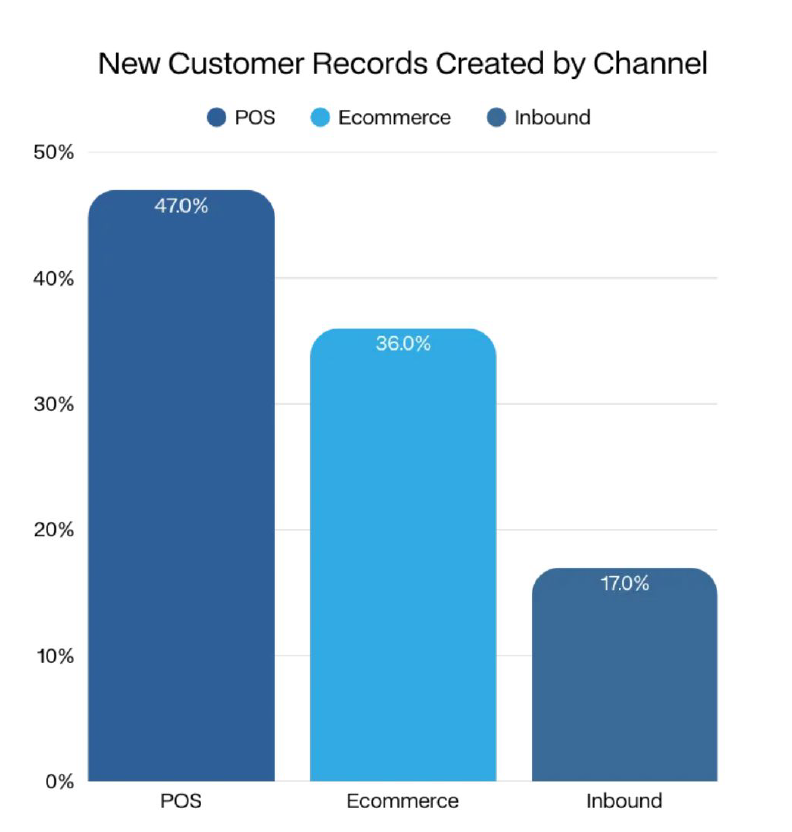
Because the tasting room sees such a high volume of transact ions, it also plays a major role in customer acquisition.
Nearly half of all new customer records (47%) are created through POS transactions, compared to 36% from the web and 17% from inbound channels. For many wineries, the tasting room represents the first moment a guest becomes a known customer in their database. Capturing guest information during this visit is critical, as it creates the foundation for future marketing, club enrollment, and repeat purchases.
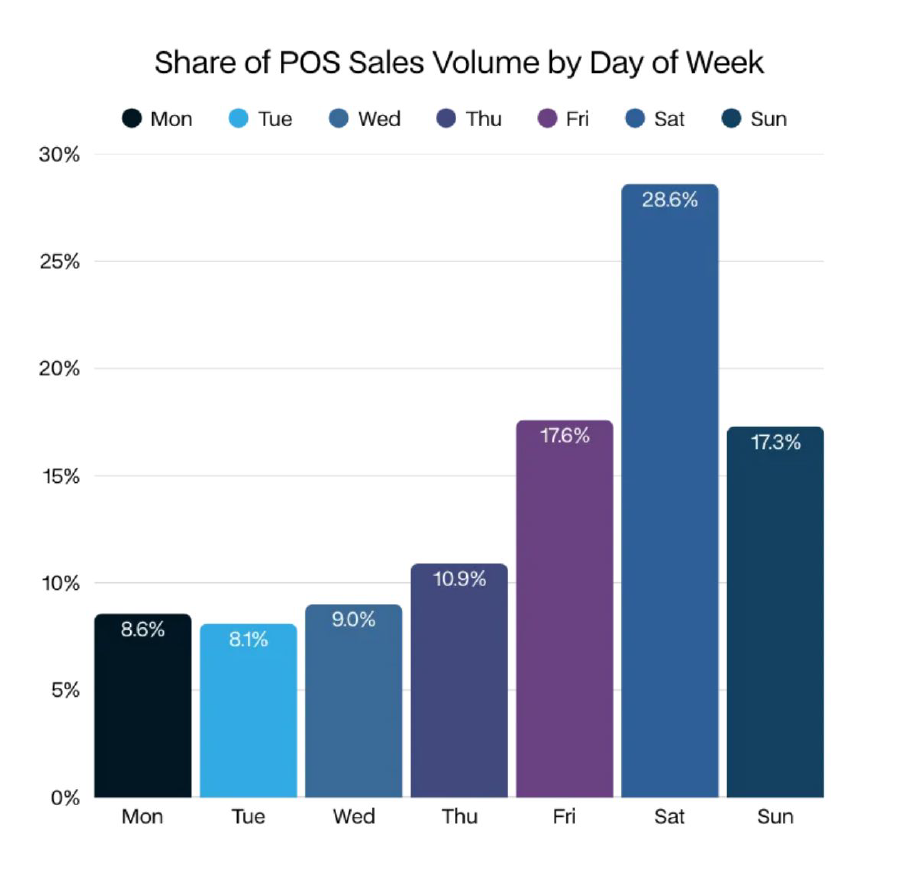
That customer activity is also heavily concentrated around weekends.
Saturday alone accounts for 28.6% of all POS sales volume, making it by far the busiest day of the week. Friday and Sunday also see elevated activity, creating a strong weekend peak for tasting room traffic. Weekdays see lower but steady activity. These patterns show just how important weekends are for tasting rooms, when the
majority of customer visits and purchases take place.
Actionable Insights
Staff your strongest experiences around weekend demand
For wineries that have a tasting room, more than 60% of POS sales volume happens Friday through Sunday, with Saturday alone accounting for 28.6%. The guests most likely to buy, join a club, and come back are walking in on your busiest days. Make sure your best hosts and most compelling experiences are there to meet them.
Use quieter weekdays for deeper conversations
Weekday traffic is lower but more evenly distributed, which creates a natural opportunity for longer, more personal interactions. These visits are well suited for introducing club membership, sharing the winery story, and building the kind of relationship that brings guests back.
Treat every transaction as an acquisition opportunity
47% of all new customer records are created at the POS, making the tasting room one of the most powerful acquisition channels a winery has. Simple habits like searching for an existing profile or collecting an email at checkout can dramatically improve long-term marketing reach.
Grow the basket through recommendations, not pressure
Because the tasting room drives the majority of DTC transactions, small increases in bottles per order add up quickly. A well-timed staff recommendation or a curated bundle option can naturally move guests from one bottle to several.
From Tasting to Purchase:
Conversion & Spend
Three in four tastings
and reservations end in
a sale.
Across six markets — Australia, Canada, Great Britain, New Zealand,
the United States, and South Africa — 75% of tastings and reservations
end in a purchase that includes at least one bottle of wine.
75%
Percent of reservations
that end in a sale
Average order values reflect both local pricing and purchasing culture.
South Africa leads in nominal terms at R1,254, though this reflects the local price environment rather than outsized basket behaviour. Among the remaining markets, Australia tops the list at A$102, followed closely by the US at $96 and New Zealand at NZ$90, with Canada and Great Britain trailing slightly.
USD 96.36
United States
Average POS Order Value
CAD 86.76
Canada
Average POS Order Value
AUD 102.22
Australia
Average POS Order Value
ZAR 1254.16
South Africa
Average POS Order Value
NZD 90.28
New Zealand
Average POS Order Value
GBP 67.44
Great Britain
Average POS Order Value
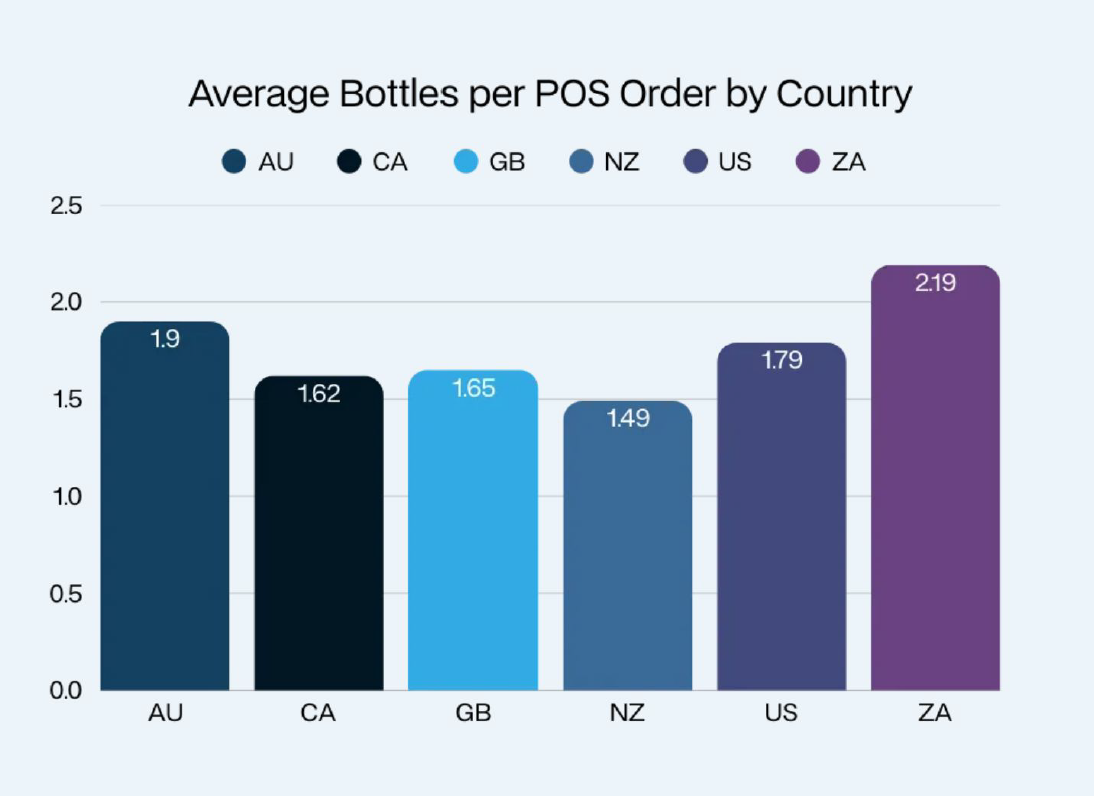
Bottles per transaction tells a complementary story.
South African visitors again lead at 219 bottles per order, with Australia (1.90) and the US (1.79) not far behind.
Great Britain and New Zealand sit at the lower end. Taken together, these numbers suggest the tasting room
experience is doing its job: getting people to the table and getting bottles in their hands.
Actionable Insights
Close the 25% gap
With 75% conversion already strong, the focus should be on understanding why 1 in 4 visits doesn’t end in a purchase. Is it pricing friction? A rushed experience? Identifying the drop-off reason is the first step to moving that number.
Grow the basket, not just the sale
Average bottle counts sit between 1.49 and 219 across markets, leaving meaningful room to grow. Simple tactics, a “take home a case” prompt, a staff recommendation of a second bottle that pairs well, or a subtle nudge toward a mixed six can lift basket size without adding pressure to the experience.
Customer-First vs Product-First:
The Power of POS workflows
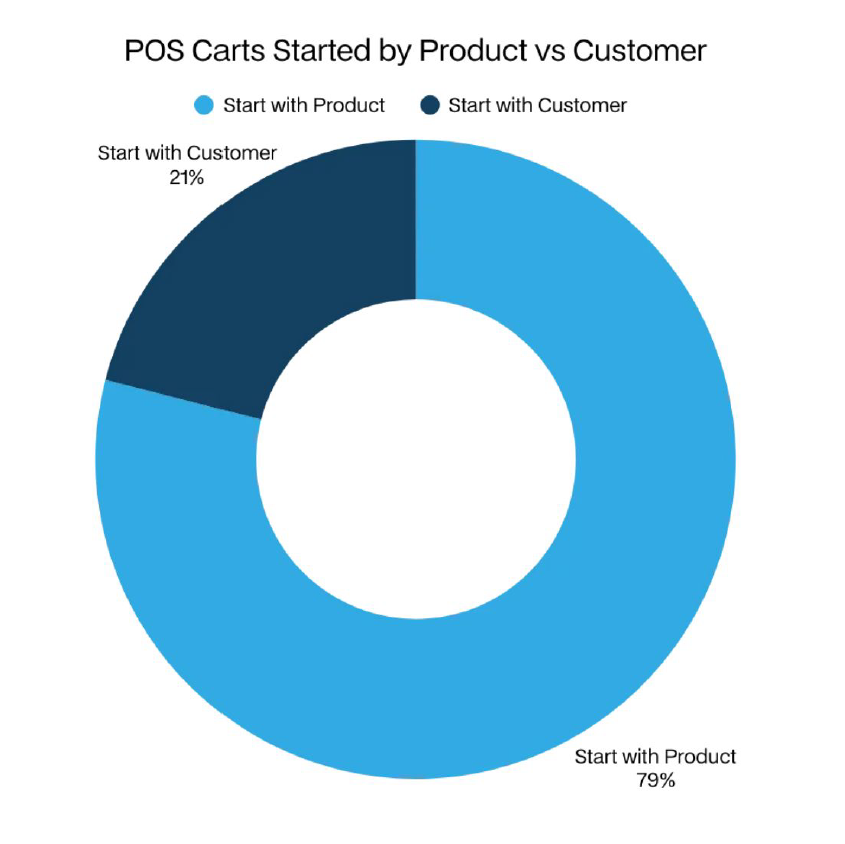
How a tasting room transaction begins has a surprising impact on the guest experience and club growth.
Across wineries, 79% of POS transactions start by selecting products, while only 21% begin by identifying the customer first. It’s an understandable habit: during a busy service period, skipping the lookup feels faster. But the cost is invisible in the moment and can be significant over time. When staff skip the customer lookup, they lose the context that makes a tasting room visit feel personal: a guest’s previous purchases, their visit history, their preferences, and even what club they’d be the best fit for. Of course, that context only exists for returning guests. For new visitors, creating a record before checkout means the winey captures a complete picture of that first interaction which is the foundation of every future conversation.
The Connection to Club Membership
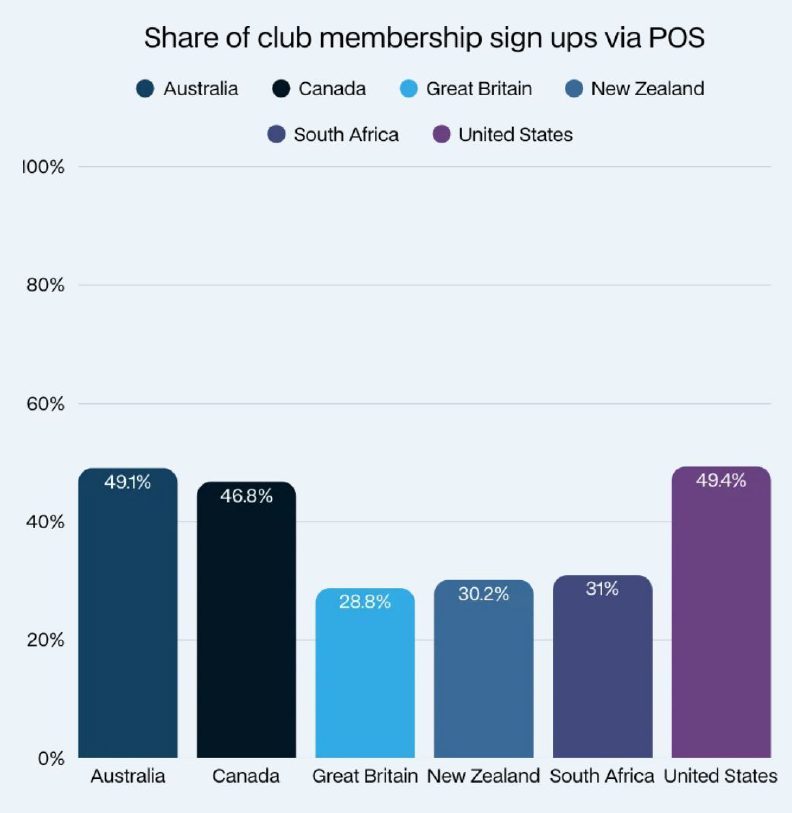
Across markets, a significant share of club signups happen directly through the POS: Australia and the United States both see roughly 49% of memberships created in the tasting room, with Canada close behind at 46.8%. Even in markets with lower shares, like Great Britain and New Zealand, a meaningful portion of club enrollments still happen in person, during the visit. These numbers reinforce the tasting room as more than a sales channel. It’s often where the strongest customer relationships begin, and that starts with something as simple as looking up the customer before the cart.
Actionable Insights
Train Staff to Start with the Customer, Not the Cart
Shift the default from “scan the bottle” to “find the guest.” With 79% of transactions staling product-first, a simple habit change of pulling up a customer profile before adding items unlocks the context needed to personalise every interaction. If your POS allows it, set a system-level prompt to make this the default step; small nudges like this help the behaviour stick, even on a packed Saturday afternoon.
Use That Context to Guide the Conversation
When a customer profile is open, staff have instant context: what a guest has bought before, how many times they’ve visited, and what they might love next. That information tums a transaction into a continuation of a relationship and puts staff in a far stronger position to make a membership suggestion that feels relevant, not like a pitch at the register.
For New Visitors, the Record is the Relationship
First-time guests don’t have a history yet; but that’s exactly why capturing a record before checkout matters. Every detail collected at that first interaction becomes the foundation for every conversation that follows, including the one where they join the club.
Treat the Tasting Room as a Membership Channel
With roughly half of all club signups happening directly through the POS in several markets, the tasting room isn’t just where wine gets sold, it’s where members get made. Staff who start with the customer are better placed to have that conversation at the right moment, with the right context, for the right guest.
After the Visit:
Retention & The Ecommerce Bridge
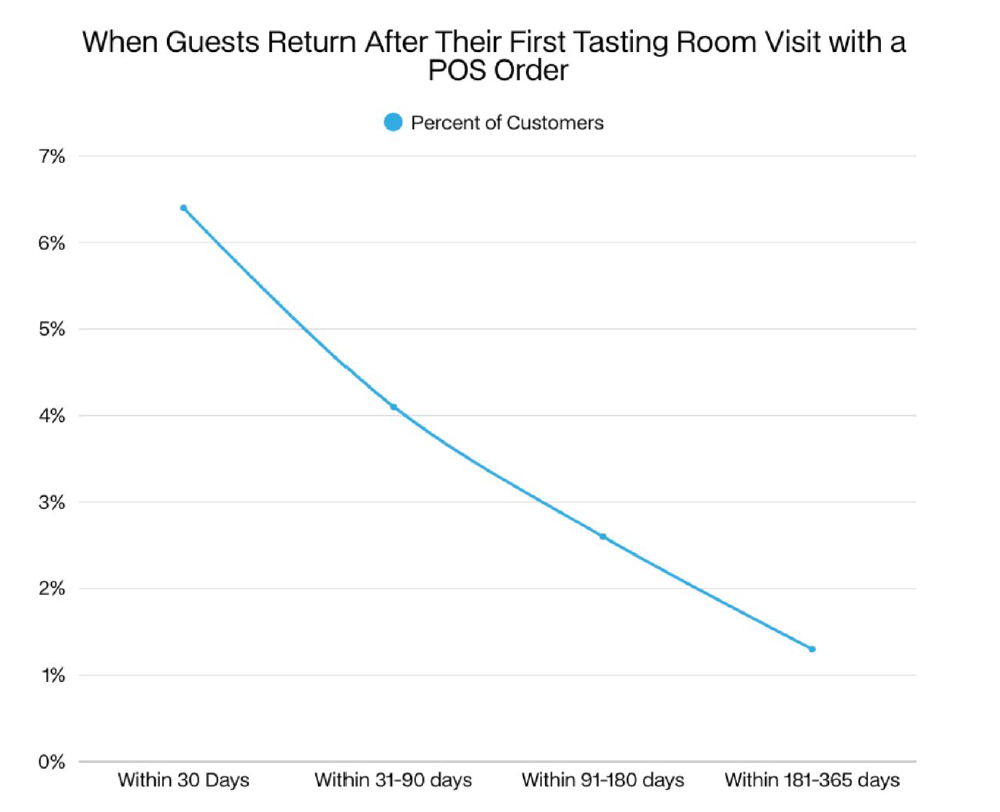
POS Order, showing 6.4% returned within 30 days, 10.5% having returned within the first 90 days, 2.6% returned between 91 and 180 days, and 1.3% after 180 days.
Not every guest who visits the tasting room becomes a regular, but many come back sooner than you might expect.
Of customers whose first tasting room purchase was in 2025, 6.4% returned within 30 days, with 10.5% having returned within the first 90 days. After that, the rate slows: 2.6% returned between 91 and 180 days, and 1.3% in the back half of the year, bringing the total one-year return rate to 14.4%. The pattern is familiar. the period right after a first visit is when interest is highest and the relationship is easiest to build on.
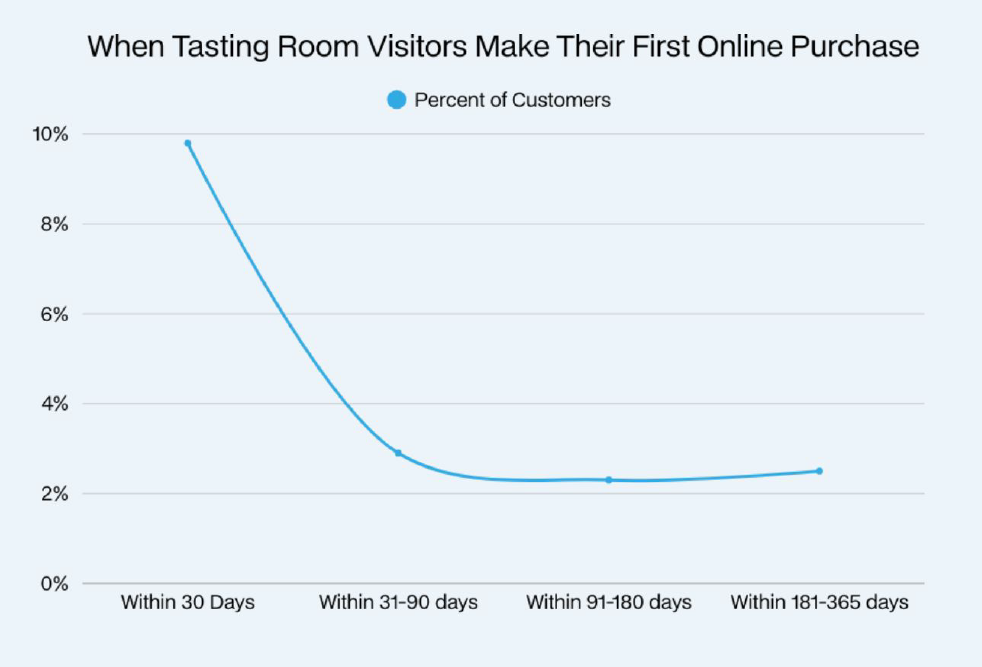
The tasting room doesn’t just drive in-
person revenue — for many guests, its
also the start of an online relationship.
9.8% of visitors place their first web order within 30 days of a tasting room visit. Conversion tapers off after that, though guests continue making that transition well beyond the first year.
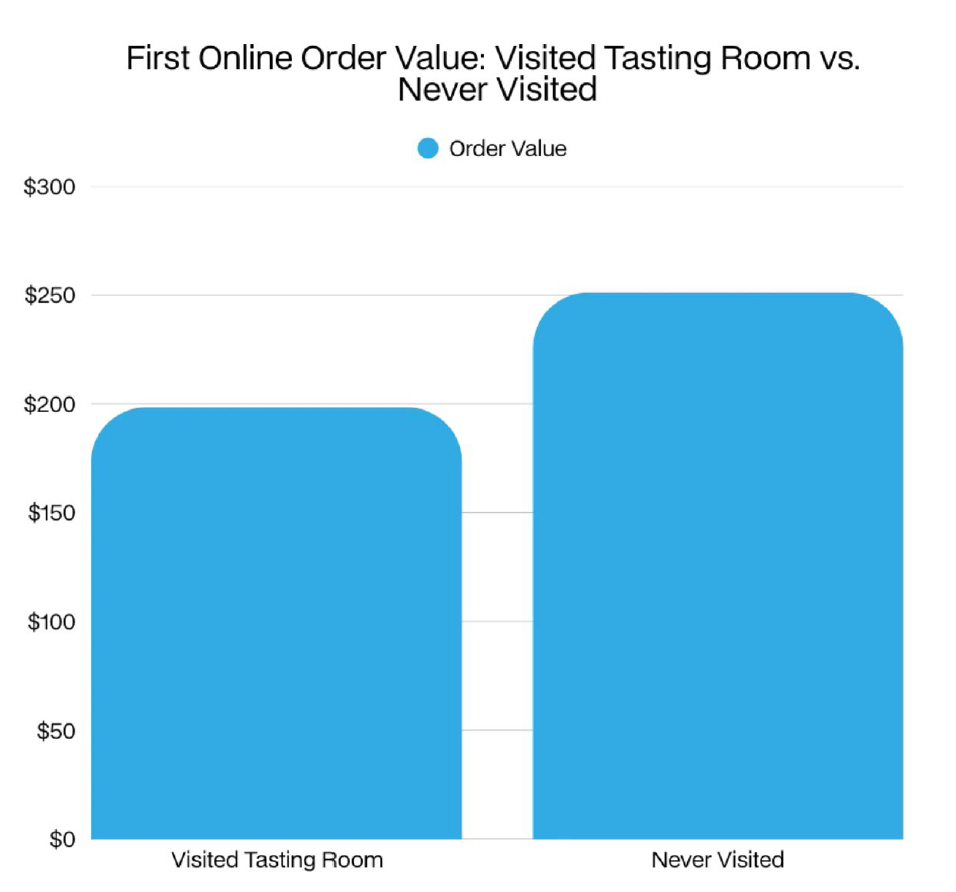
A different kind of online buyer.
Tasting room visitors who move online behave differently from customers who discover the winery through ecommerce directly. First-time web buyers with a previous tasting room purchase spent an average of $198.50 on their first online order, compared to $251.23 for those with no prior in-person visit. That gap isn’t necessarily a red flag. Customers arriving online for the first time often come with high purchase intent and place larger one-off orders, while tasting room visitors tend to shop as part of an ongoing relationship: smaller, more frequent purchases over time rather than one large initial spend.
39 Days
The median time between a customer’s first tasting room purchase and their next transaction, whether in person or online, is just 39 days. That’s the heartbeat of early retention, and it’s the clearest signal of when to show up. Guests are most reachable, most interested, and most likely to buy again in that first month after their visit.
Actionable Insights
Prioritize the first 30 days
The repeat visit and web conversion data both point to the same window With a median 39 days to second purchase and the
strongest online conversion happening within 30 days of a visit, post-visit follow-up isn’t optional. It’s where retention is won or lost. A
timely, well-crafted message in that window is worth more than several generic ones sent later.
Treat the tasting room as the top of your ecommerce funnel
The in-person experience is clearly influencing online behavior, but only if there’s a bridge. Post-visit email flows, online exclusives, and
timely new release announcements are what turn a great tasting into a lasting online customer.
Keep repeat visitors coming back with a reason to return
With 14.4% of first-time tasting room guests returning within a year, there’s a meaningful base of guests who are already engaged. Give
them something to come back for. new releases, seasonal events, member previews, or simply a well-timed invitation. The relationship
doesn’t have to fade after the first visit.
The Bottom Line
Across every dataset, one theme repeats:
The tasting room is where relationships begin, and how you run it determines how far they go.
The data is consistent across markets. Three in four tasting room visits end in a purchase. Nearly half of all new customer records are created at the POS. Club signups, repeat visits, and first online orders all spike in the weeks immediately following a tasting room experience.
The tasting room isn’t just a sales channel. It’s the starting point for everything that comes after.
But the opportunity is only realised when wineries treat each visit as the first step in a longer relationship, not a single transaction to close. That means capturing guest information, starting with the customer before the cart, and following up while the interest is still high.
The wineries making the most of their tasting rooms are doing three things well:
- Identifying guests at the point of sale, not after
- Personalising the experience using what they already know
- Following up quickly, before the 39-day window closes
Ready to make more of every visit?
Talk to our team about how Commerce7 helps wineries turn tasting room traffic into lasting customer relationships.